It's official: the first ESG Boost cohort has been launched. Initiated by Beci and Pulsitive Impact, the six-month programme supports Brussels-based companies in implementing their ESG strategy. Diagnostics, workshops, coaching and discussions: what can we expect from the programme?
It had been in the works for several months, and now it's a reality. On 7 October, Beci officially launched the first cohort of ESG Boost, a unique programme run in collaboration with Pulsitive Impact and a strong network of partners: Ignéos, D-Carbonize, SensUp, Elpix, Partena Professional and 21 Solutions. Designed to run for six months, at a rate of two days per month, the programme offers Brussels-based companies comprehensive support in the three areas of ESG: environmental, social and governance. Diagnostics, workshops, peer exchanges and coaching will punctuate this semester of collective learning.
‘The idea is to help companies turn words into action,’ explains Catherine Mertens, head of the ESG community at Beci. She sums it up: ‘ESG Boost is not a series of conferences, it is a programme where you learn, test and share.’
ESG For All: the gateway
Before the ESG Boost programme, there were (and still are) the ‘ESG For All’ events. These awareness-raising mornings, open to all and organised every month by Beci, have helped many companies to familiarise themselves with sustainability. They cover the basics: what does ESG cover? How can you navigate the regulations? And above all, where do you start?
The idea was to democratise a subject that is often perceived as technical. ‘Many companies want to do the right thing, but don't know where to start or how to go about it,’ notes Catherine Mertens. ‘ESG For All is the first step. ESG Boost is the logical next step.’ The link between the two programmes is obvious: several companies that came to ‘just listen’ during an ESG For All morning session ended up taking the leap and joining the training programme.
The pioneering companies
For this first edition, companies from a variety of sectors are participating: Marriott, Choux de Bruxelles, EDGE Consulting, IMC Belgium, and even Beci. This is a deliberately symbolic approach. ‘If we invite companies to take part in training, it is only natural that Beci should lead by example,’ says the head of the ESG community. ‘Following the programme also gives us a better understanding of the obstacles, needs and expectations on the ground.’
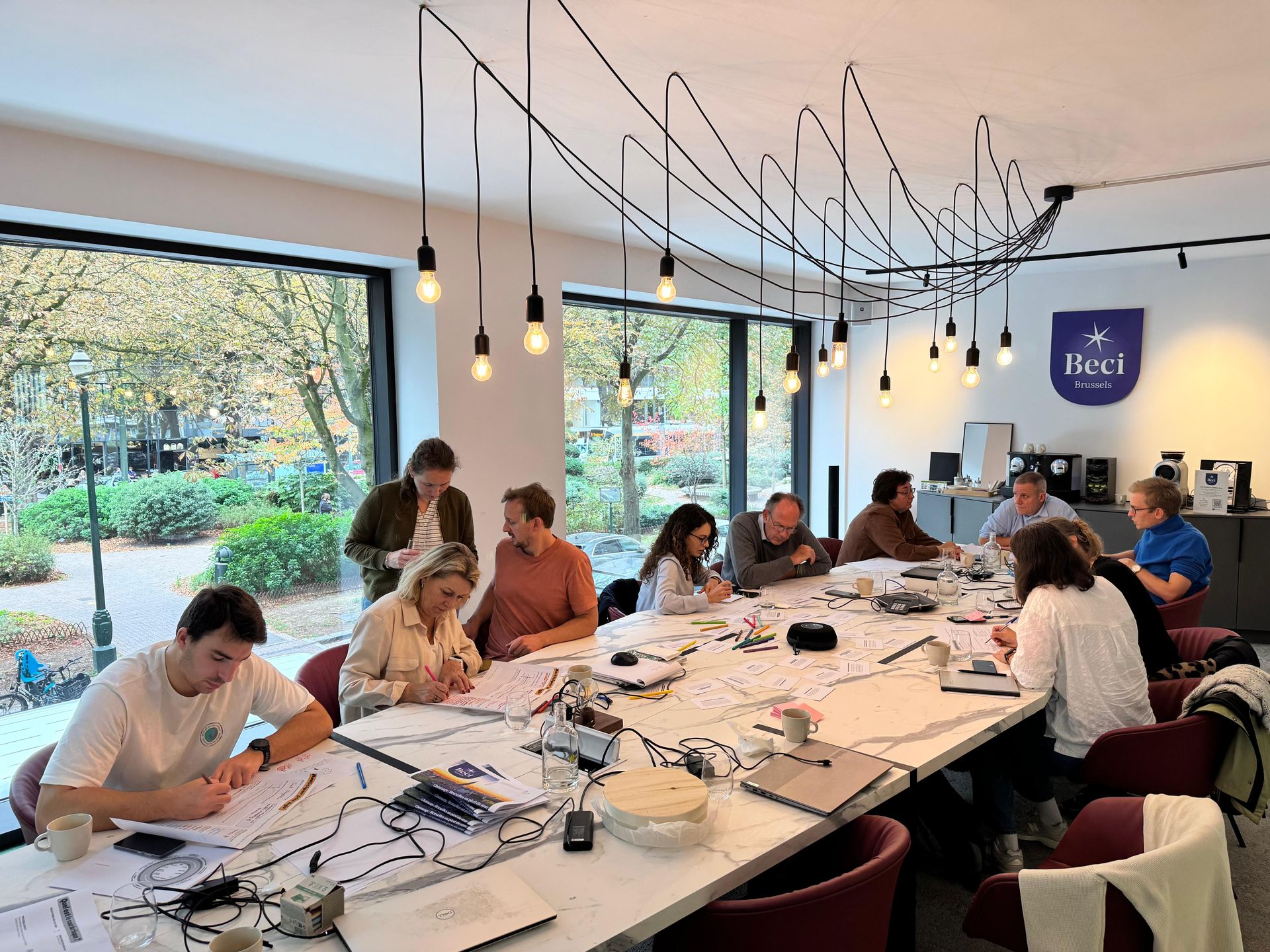
Around the table, there is a mix of profiles: players from the tourism, catering, consulting and logistics sectors, among others. This diversity of experience is what makes the programme so rich. Together, the participants discover ESG topics through practical workshops, field exchanges and tailor-made support. They all share the same desire: to develop their practices, at their own level, and to build a sustainable strategy.
From compliance to strategy
The programme is part of a rapidly changing landscape. With the entry into force of the European CSRD (Corporate Sustainability Reporting Directive), ESG reporting is now mandatory for a growing number of companies, including SMEs. For many, it is no longer enough to do ‘a little bit of sustainability’; they need to be able to demonstrate and structure it... and quickly.
This is where the programme comes in: a course that provides both the tools and the methodology. ESG diagnosis, carbon footprint assessment, tailor-made strategy, operational coaching... each module combines a morning session entitled ‘ESG For All’ with practical workshops in the afternoon. The themes follow on from one another: sustainable financing, governance, inclusion, energy transition, climate adaptation. ‘Companies need a realistic framework that takes into account their size and constraints,’ says Catherine Mertens. ‘That's exactly what ESG Boost offers.’
Towards a sustainable corporate culture
Beyond regulatory compliance, the programme aims to embed sustainability into the very culture of organisations. Participants leave with a comprehensive assessment (governance, carbon footprint, social practices), an operational strategy and, above all, a roadmap tailored to their specific situation. The programme also addresses practical issues: how to mobilise teams; who is responsible for ESG internally; how to convince management; and how to write a CSRD-compliant report.
"Some people don't have the time to go out and find the information. It is the role of a chamber of commerce to shed light on these issues," says the head of the ESG community, highlighting the role of Beci. The sessions are therefore designed to be resolutely pragmatic, with collaborative workshops, individual coaching and peer-to-peer exchanges. The aim is for each company to leave with a realistic and measurable action plan.
Why this matters to Brussels
Beyond the individual interests of each organisation, ESG Boost is part of a broader ambition: to develop the Brussels ecosystem and accelerate the dissemination of ESG best practices in Brussels. Training, sharing feedback, strengthening skills and creating a common dynamic: all of this contributes to building a more robust regional economy.
Catherine Mertens emphasises the human dimension of the project: ‘Training and supporting people takes time, listening and adaptation. By following the programme ourselves, we go through the same stages as the companies we support. It's a way of progressing together.’
What now?
For those who were unable to register for the programme, the ‘ESG For All’ events remain a gateway to learning and getting involved. The next event on 18 November will focus on financing the transition. Register now